

Járdányi Paulovics István Roman Ruins Park
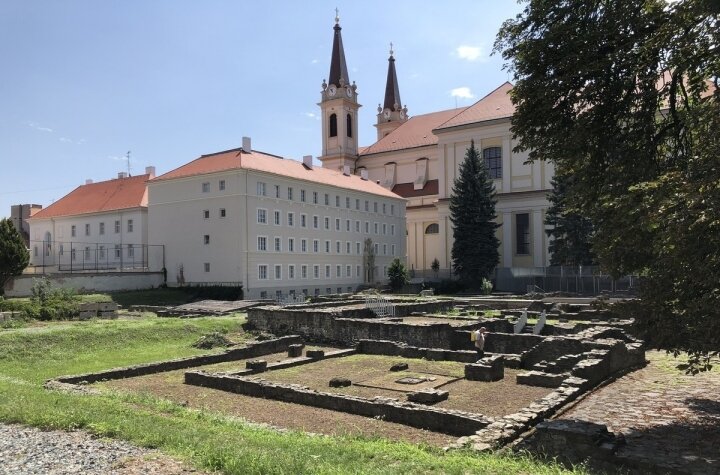
Located in the city center, on the grounds of the Bishop’s Garden and the seminary kitchen garden, the Roman Ruins Park has showcased the western district of Colonia Claudia Savaria since 1938. It officially opened in 1943, marking the 1,900th anniversary of the city’s founding, with protective structures designed by Géza Lux. It became Hungary’s second archaeological park after Székesfehérvár.
Excavations have revealed the city walls, residential insulae, an industrial district outside the walls, and a customs house. In the 4th century, the governor’s palace was built on the site of the insulae, with the most significant feature being the Aula Palatina reception hall, visited by emperors Constantine I, Constantius II, and Valentinian. The floor was decorated with a colorful mosaic, the largest continuous mosaic surface known in the Pannonia province today.
The park also displays the foundations of bathhouses and the Mercury temple, as well as basalt-paved Roman roads used by legions, merchants, and local craftsmen. Medieval buildings, including parts of Szombathely’s castle built from a Roman octagon, were also uncovered. The current landscape integrates the Baroque English-style Bishop’s Garden, with trees and gentle hills.
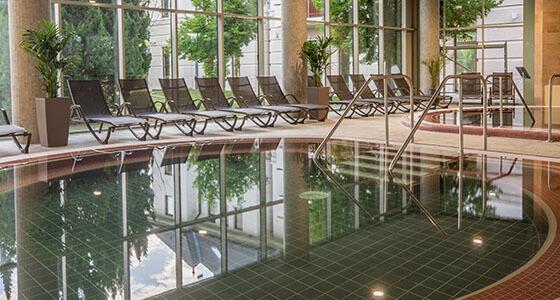
We offer a wide range
of relaxation and leisure activities for all ages!
Discounted Experiences
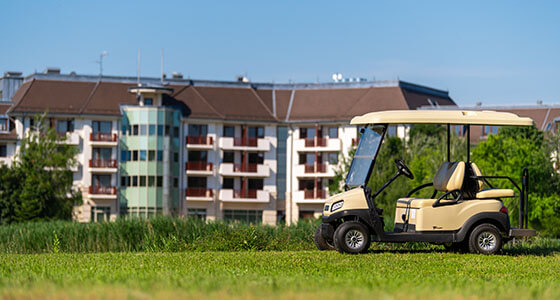
Explore the surroundings and enjoy the benefits of discounts offered by our partners for our hotel guests!